翻訳済み
このページは日本語に翻訳済みです。
direction
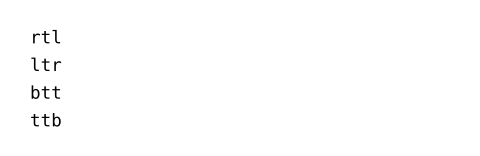
コンテンツをレイアウトできる4つの向き。
取りうる値は以下の通りです。
ltr: 左から右。rtl: 右から左。ttb: 上から下。btt: 下から上。
これらの値はグローバルスコープでも、direction型のスコープでも使えます。 したがって、以下の2つのどちらでも書けます。
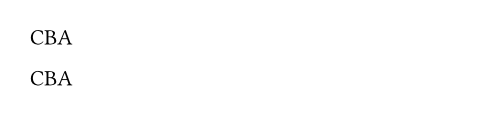
#stack(dir: rtl)[A][B][C]
#stack(dir: direction.rtl)[A][B][C]
定義定義これらの関数や型には、関連する定義を持たせることができます。定義にアクセスするには、対象の関数や型の名前を指定した後に、ピリオド区切りで定義名を記述します。
定義
これらの関数や型には、関連する定義を持たせることができます。定義にアクセスするには、対象の関数や型の名前を指定した後に、ピリオド区切りで定義名を記述します。
from
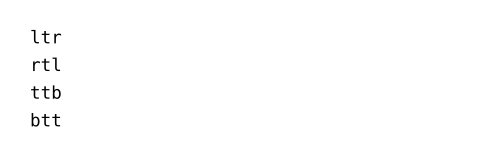
from指定した引数を始点とする向きを返します。
例を表示
#direction.from(left) \
#direction.from(right) \
#direction.from(top) \
#direction.from(bottom)
direction.from()->side
sideto
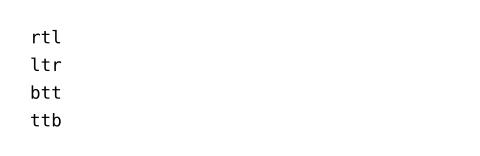
to指定した引数を終点とする向きを返します。
例を表示
#direction.to(left) \
#direction.to(right) \
#direction.to(top) \
#direction.to(bottom)
direction.to()->side
sideaxis
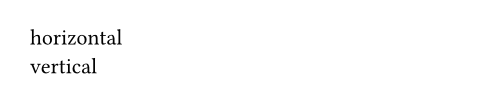
axisこのdirectionが属する軸。"horizontal"か"vertical"のいずれかになります。
例を表示
#ltr.axis() \
#ttb.axis()
self.axis()->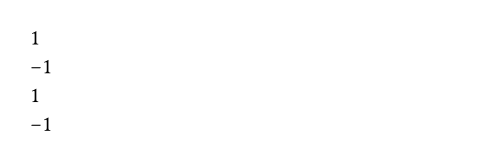
start
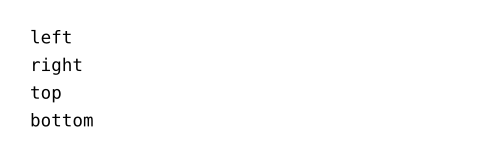
startこのdirectionの始点をalignmentとして返します。
例を表示
#ltr.start() \
#rtl.start() \
#ttb.start() \
#btt.start()
self.start()->end
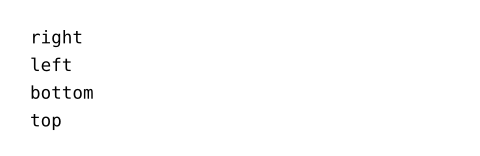
endこのdirectionの終点をalignmentとして返します。
例を表示
#ltr.end() \
#rtl.end() \
#ttb.end() \
#btt.end()
self.end()->